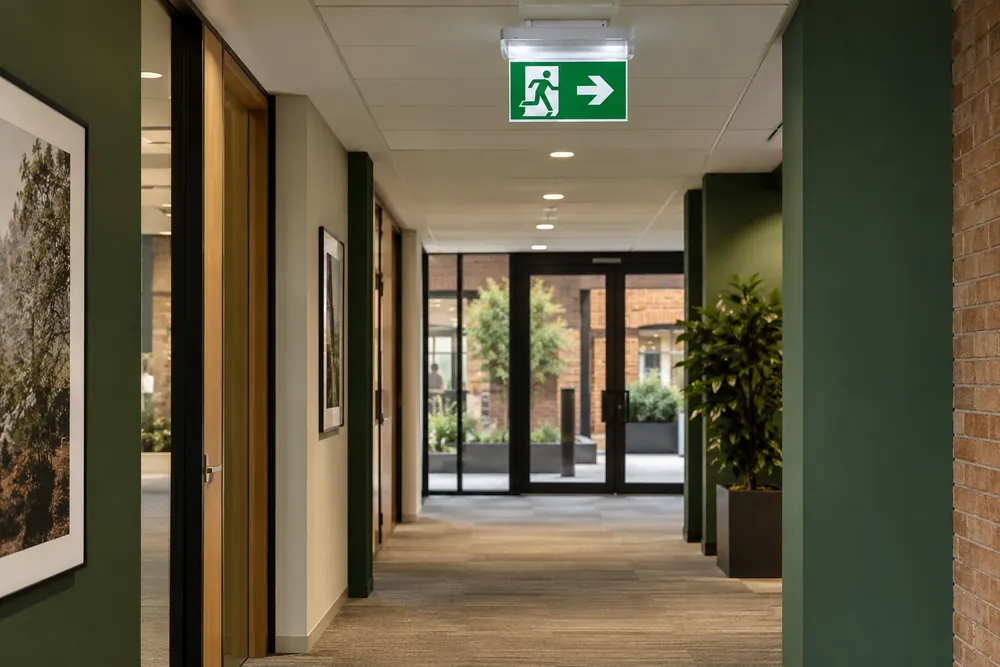
Check Performance When Normal Lighting Fails
Emergency lighting testing checks how the installed lighting responds when its normal supply is interrupted. A fitting that appears sound during the working day may have a failed battery or another fault that only becomes apparent during a controlled test.
We help commercial building managers in Leeds arrange a testing scope suited to their premises and working hours. Offices, warehouses and schools need a plan that considers both access to fittings and the effect of testing on safe occupation.
Testing also needs to connect with the building layout. A working fitting may still leave a concern if partitions, racking or escape routes have changed since the lighting was designed.
Function Testing And Duration Testing
A short function test checks whether the emergency lamps operate when the test facility is used. A duration test examines whether the equipment continues to work for its rated period, and needs more careful planning around recharge and continued protection.
Buckinghamshire Fire & Rescue Service describes monthly testing with recorded findings and annual testing by a competent person. The actual test arrangements should account for the system, instructions and applicable technical guidance.
Automatic testing facilities can change how the checks are carried out, but someone still needs to review results and arrange repairs. A test log with unresolved failures is not the same as a maintained installation.
Standards And Your Building Duties
BS 5266-1:2025 is the current British code of practice for emergency lighting of premises. BS EN 50172 addresses emergency escape lighting systems, while the Fire Safety Order establishes the wider duty to maintain appropriate precautions.
The testing proposal should identify the system and scope, including central battery equipment or self-contained fittings as applicable. Ask how the provider will deal with missing drawings, unknown ratings or unlabelled test switches.
A routine test is not automatically a fresh design assessment. If you need evidence about lighting coverage or a changed escape route, say so before booking and agree any additional survey or measurement work.
Plan The Visit Around Safe Occupation
First, gather your lighting register, drawings, previous results and known failures. Agree which buildings and areas are included, and identify test facilities, access restrictions and any fittings needing specialist access equipment.
Next, select a suitable testing window with the responsible person. A full duration test can leave batteries needing recharge, so the plan must account for what happens if the normal supply fails during that recovery period.
At the end, confirm restoration of normal supply and charging indications where applicable. The record should identify tested fittings, results, limitations and any repairs recommended, with a clear route for urgent findings.
Use Results To Close The Gaps
Failures should be linked to a fitting identifier and location so an electrician or maintenance contractor can find the correct unit. Ask whether the cause requires a battery, a replacement fitting or further fault investigation.
After repairs, arrange the appropriate retest and update the record. Keep items that could not be tested separate from passes, and make a plan to obtain access rather than quietly omitting them from the register.
Where coverage is in doubt, discuss the finding through your fire risk assessment. Coordinate planned visits with alarm servicing where useful, while keeping the testing and reporting for each system clear.
What Changes The Cost Of Testing
The fitting count, system type, duration requirement and access arrangements affect the work involved. A single-floor office with an accurate register is a different scope from several buildings with missing records and high-level fittings.
Ask whether fault diagnosis, batteries, replacement luminaires, access equipment and retesting are included. If the asset register must first be created or corrected, that should be visible in the proposal.
For a useful enquiry, include your premises type, approximate fitting count, working hours and last test information. Explain whether you need routine testing, investigation of failures or a review following refurbishment, as those tasks have different deliverables.
Useful Answers
Emergency Lighting Testing Questions
How Often Should Emergency Lighting Be Tested?
Emergency lighting testing generally includes a monthly function check and an annual competent test, with the results recorded. The installation’s instructions and applicable guidance determine the detailed arrangements. Automated systems still need their results reviewed, and failed equipment needs prompt attention rather than being left until the next scheduled test.
Does A Duration Test Affect Building Use?
An emergency lighting duration test can affect safe building use because batteries may need time to recharge afterwards. Agree the timing and any temporary precautions with the responsible person. Do not assume the building can remain occupied normally if the lighting would be unable to support safe escape during recovery.
Will A Test Confirm Lighting Coverage Is Correct?
Emergency lighting testing checks the performance of the equipment within its agreed scope. It does not automatically confirm that the design still suits a changed layout or escape route. Tell the provider about new partitions, racking or alterations and request a separate coverage review where the existing design needs reassessment.